Targeted Pain Relief
 Health Monitoring
 Bye-Bye Itch
 Rest, Relax, Recharge
 Skin Rejuvenation
 Seasonal Relief
 Muscle Relaxation
 Brighten Your Mood
 Kids Wellness & Baby Care
 Fitness Tracking
 Beauty Care
 Feminine Care
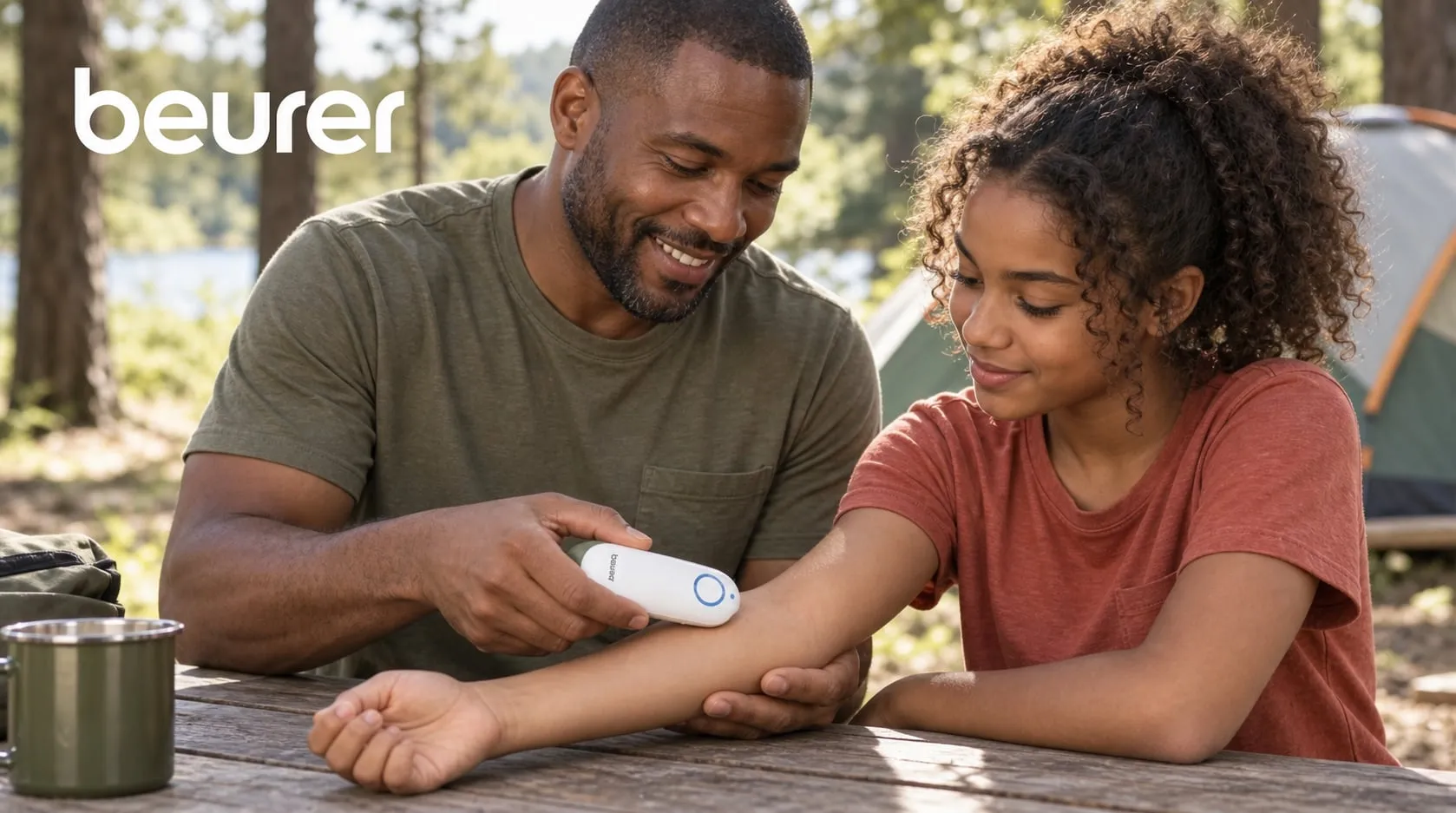
Beurer BR60 vs BR90 vs BR10: which insect bite healer fits you
Compare the Beurer BR10, BR60 and BR90 insect bite healers on price, settings and features, and find which heat pen fits your bites and budget.
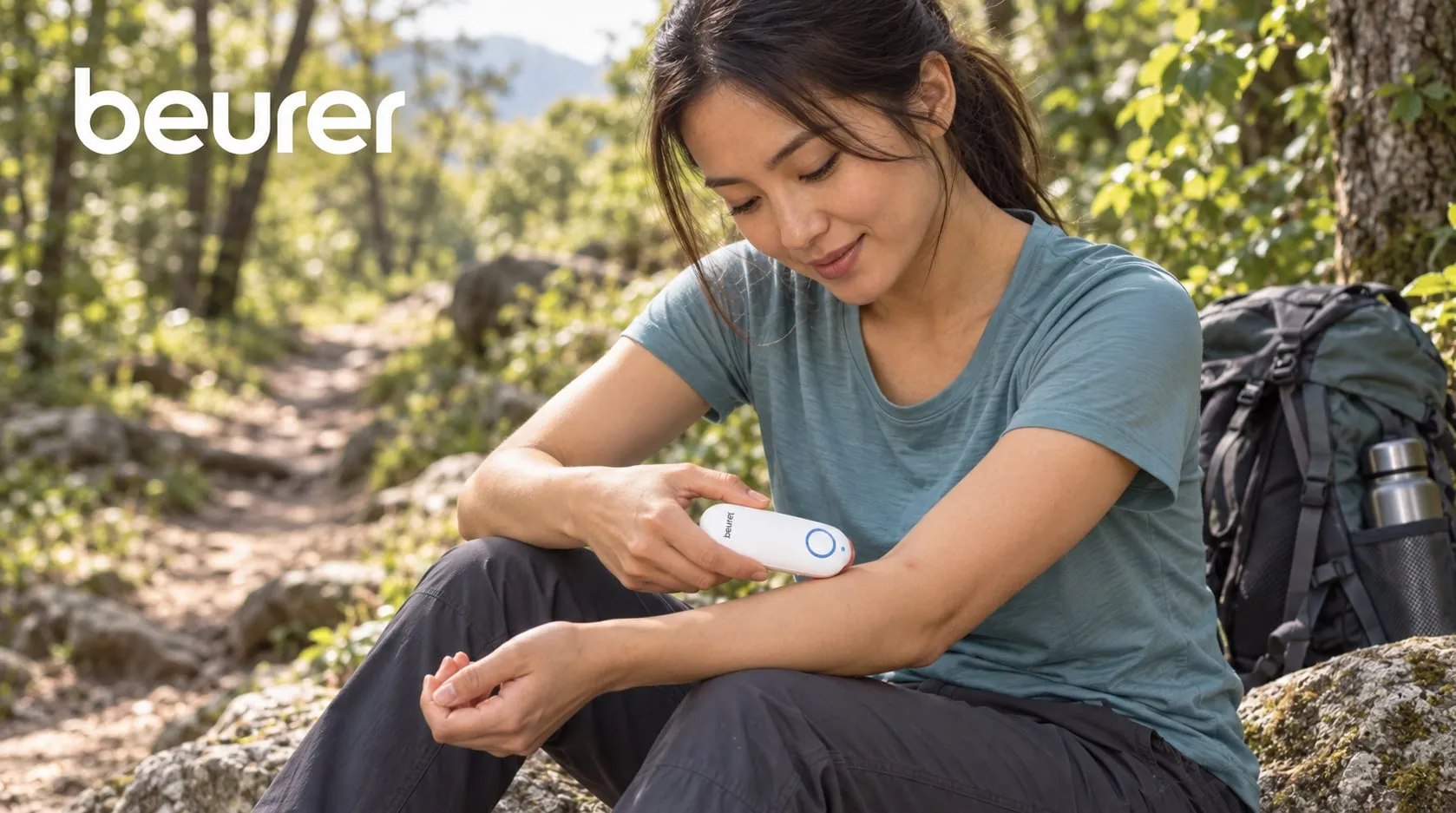
You are standing in the same aisle as thousands of other readers this summer: two products, both promising drug-free relief, and no clear way to choose. On one side, a small device that presses concentrated heat onto the bite. On the other, plant extracts in little glass bottles. Both say natural. Both say no medication. Only one of them comes with published numbers behind it.
This comparison comes up most often for readers who have ruled out the usual first choices. If you are pregnant or nursing, you have probably been told to limit hydrocortisone and oral antihistamines, which leaves the shelf looking suddenly empty. Parents of young children and adults with sensitive or eczema-prone skin face the same wall: every effective option seems to come with a caveat. That is when the drug-free aisle starts to look interesting, and the question becomes which kind of drug-free actually works.
Before any product, most households improvise: baking soda paste, vinegar, creams and oral and topical antihistamines together just to get through the night. Mayo Clinic does list a paste of baking soda and water as a reasonable home measure for an itchy bite[1], but improvised fixes in general are inconsistent. The CDC gives a simpler baseline that works before any add-on remedy:
Those steps cost nothing and are worth doing every time. The real decision starts after them, when the itch is still there and you are choosing between a device and a bottle. That choice comes down to three factors: the strength of the evidence, how each option is actually used, and how fast it works. We compare them directly in the next section.
A preview of where that comparison lands: a large real-world study of more than 12,000 treated bites found concentrated heat reduced mosquito-bite itch by 57% within the first minute and by 81% after 5 to 10 minutes[2]. Essential oils, by contrast, carry limited scientific support and come with a clear flag for pregnant or breastfeeding readers to consult a doctor first[3], and they need careful dilution in a carrier oil before they touch skin[4].
The two approaches work in completely different ways, and that difference shows up most clearly in the moment you need relief. A bite healer applies concentrated warmth directly to the bite for a few seconds, using a heated ceramic plate that activates with a single press. Essential oils are highly concentrated plant extracts that you must mix with a carrier oil before they ever touch your skin, because Healthline warns that direct application can cause burning and stinging that makes bite symptoms worse[4].
| Bite healer | Essential oils | |
|---|---|---|
| How it works | Concentrated heat applied to the bite for a few seconds; a real-world study of about 1,750 participants and more than 12,000 treated bites found mosquito-bite itch fell 57% within the first minute and 81% within 5 to 10 minutes | Plant extracts that anecdotal reports suggest ease inflammation and itchiness, though scientific support for those claims is limited |
| What you carry | One small device, no refills | Bottles of oil plus a carrier oil and droppers |
| Prep before use | None; press and treat | Dilution required, usually around 5 drops of essential oil per ounce of carrier oil |
| Time to relief | Seconds, on the spot | Varies by person; relief may be limited and oils do not work for everybody |
In the seconds after a bite, the practical gap is widest. With a heat device, you press the plate against the bite, hold for the set time, and the warmth does its work; there is nothing to measure, mix or spill. With essential oils, you first need your carrier oil and the right dilution ratio, and even then the evidence behind them is thin: Medical News Today notes that the research on oils such as peppermint and camphor comes from animal or laboratory work, and that clinical studies are still needed to confirm the effect in people[3].
For anyone who is pregnant or nursing, there is one more difference worth knowing. Medical guidance recommends that pregnant or breastfeeding people consult their doctor before applying essential oils to their skin at all[3]. A heat-based device involves no oils, no medication and nothing absorbed through the skin, which is why it is designed to be suitable during pregnancy as well as for children from age 3. As with any skin treatment, check with your healthcare professional if a bite looks infected, keeps swelling or concerns you.
If you are weighing these two options while pregnant or nursing, the strength of the evidence behind each one matters more than any marketing claim. On the essential oils side, the research picture is thin. Medical News Today notes that anecdotal reports suggest oils help with bites but scientific support for those claims is limited, and that the FDA more often than not does not monitor essential oils closely and treats them as cosmetic products[3]. Healthline's own round-up leans on the same kind of indirect evidence: its basil entry rests on a study that only tested mice, and its rosemary entry on a study in rats[4].
The National Center for Complementary and Integrative Health is similarly cautious: for tea tree oil, one of the most popular choices for bites, it concludes there is not enough evidence to determine whether it is useful for most conditions, and notes it can cause skin redness or irritation in some people[5]. Oils also carry practical rules that matter when you are pregnant: most must be diluted in a carrier oil before they touch skin, and it is worth running any essential oil past your doctor or midwife first.
On the heat side, the evidence is more concrete. A real-world study published in Acta Dermato-Venereologica tracked more than 12,000 treated bites from about 1,750 participants and found that concentrated heat reduced mosquito-bite itch by 57% within the first minute and by 81% 5 to 10 minutes after treatment[2]. One honest caveat: that study used a smartphone-controlled heat device, so the results speak to concentrated heat as an approach rather than to any specific product. Consumer bite healers apply that same principle in short, timed doses, with a 3-second setting for sensitive skin and a 6-second setting for regular use.
For readers who cannot or prefer not to use medicated creams, the practical difference is this: heat has at least one large controlled study behind it and no dilution rules, while essential oils rest largely on lab and animal work plus tradition. Neither replaces medical care. If a bite reaction is severe, spreading, or accompanied by symptoms beyond the skin, contact a healthcare professional rather than reaching for either option.
For families, the comparison is often decided less by the science and more by what is realistic on an ordinary Tuesday. Essential oils are not a dab-and-go remedy. Healthline notes that essential oils should be diluted in a carrier oil before they touch skin, at roughly 5 drops per ounce of carrier oil[4]. That means carrying a bottle of oil, a bottle of carrier, measuring something out and mixing it correctly, ideally with a patch test first. On a hiking trail, at a campsite or at 2am with a child scratching, that routine rarely happens, and skipping the dilution step is what raises the risk of skin irritation.
Pregnancy adds another layer of caution. Medical News Today advises pregnant or breastfeeding women to check with a doctor before applying essential oils to the skin[3], which leaves many expectant mothers unsure whether the remedy in the cabinet is even allowed. A heat-based device sidesteps that question because nothing is applied to or absorbed through the skin: manufacturer product material for these bite healers describes them as appropriate for users 3 years and older and for pregnant women.
Portability is the last practical difference. Essential oils travel in glass bottles that can leak or shatter in a pack, and some airlines and trail kits make liquids awkward. A clip-on device like the Beurer BR10 rides on a keychain or bag, works without water or mixing, and is ready the moment a bite starts to itch. Whichever option you choose, any bite that triggers spreading swelling, hives, trouble breathing or signs of infection belongs with a healthcare professional, not a home remedy.
Both options are gentle on the skin when they are used correctly, and both have limits worth knowing before you choose. Essential oils are highly concentrated plant extracts, and applying them straight to a bite can cause burning and stinging that makes the itch worse. Healthline recommends diluting most oils in a carrier oil and doing a very small skin test before using any oil generously.[4]
Some oils are best left out of bite care entirely. Medical News Today advises avoiding these on bites or on broken or irritated skin, because they can trigger irritation or allergic reactions:[3]
The same source notes that peppermint oil should not go on broken skin, since it may burn or aggravate it, and that pregnant or breastfeeding people should check with their doctor before applying essential oils to their skin.[3] That last point matters if you are expecting and weighing drug-free options: natural does not automatically mean safe in pregnancy.
A heat-based bite healer has a different risk profile: instead of adding a substance to the skin, it applies concentrated warmth for a few seconds. The sensation is briefly warm to hot, then fades. To use one well, follow the device manual rather than improvising, and use the 3-second setting on sensitive skin and the 6-second setting for regular use.
One limit applies to both approaches. If you suspect a venomous spider bite, such as from a brown recluse or black widow, do not treat it with oils or heat before a professional has confirmed what it is. Healthline advises seeking medical care immediately in that situation.[4] And if a bite becomes severely swollen, starts oozing, or comes with shortness of breath, flushing or vomiting, that is a medical situation for a healthcare professional, not a home remedy.[3]
Before you choose between a bite healer and essential oils, it helps to be clear about what both have in common: neither one cures a bite. A bite or sting is a reaction your body has already started, and both approaches only ease the itching and swelling while it runs its course. Neither treats an infection that has already taken hold, and neither is a treatment for an allergic reaction. Medical News Today is direct on this last point: a person should never use essential oils to treat an allergic reaction.[3]
That boundary matters most with severe reactions. Anaphylaxis is a life-threatening reaction to stinging insect venom, and the American Academy of Allergy, Asthma & Immunology describes it as a medical emergency, not a skin problem to manage at home.[6] A large local reaction, where swelling extends well beyond the bite itself, also belongs with a healthcare professional. Seek emergency care right away for trouble breathing, hives, flushing, vomiting or dizziness after a sting, and see a doctor promptly if a bite becomes very swollen or starts oozing, which can signal infection.[3]
Relief is also only half the picture, because prevention still does the heavy lifting. The CDC recommends EPA-registered insect repellents, which are evaluated for effectiveness and considered safe when used as directed, including for pregnant and breastfeeding women.[7] The American Academy of Dermatology adds that a repellent with 20 to 30 percent DEET on exposed skin and clothing, plus long sleeves and pants, is the practical baseline for keeping bites from happening in the first place.[8]
So the honest framing is this: repellents reduce how many bites you get, and a bite healer or a properly diluted essential oil can only make the bites you do get more bearable. If a reaction looks like anything beyond a local itch, skip both and talk to a healthcare professional. That is not a limitation of one option over the other. It is simply what home treatment is for, and knowing the line is part of using either one well.
If you are pregnant or nursing, if you are treating a child aged 3 or older, or if you simply want relief that works without mixing anything, a heat-based bite healer is the simpler pick. It is one device, one press, no carrier oil, no dilution math, and nothing new sitting on your skin. Essential oils are the better fit for readers who already keep them on the shelf, blend them routinely, and enjoy that ritual. For everyone else, the extra steps are a real cost at the exact moment you want relief.
The evidence points the same way. Medical News Today notes that scientific support for essential oils on bug bites is limited, that most studies behind popular oils like peppermint, tea tree and camphor were done in animals or labs, and that oils must always be diluted before they touch skin[3]. Healthline adds that direct application can cause burning and stinging that makes bite symptoms worse, and that pregnant or breastfeeding people should check with a doctor before applying essential oils at all[4]. A bite healer sidesteps all of that: concentrated warmth applied to the bite for a few seconds, with nothing to measure or mix.
If that is the direction you are leaning, the Beurer BR10 Portable Insect Bite Healer is built for exactly this situation. It clips to a keychain or bag, runs on standard batteries so there is nothing to charge, and its ceramic plate heats on a single press to apply concentrated warmth that helps reduce itching and swelling from mosquito bites, bee stings and other bites, without chemicals or creams. It is suitable from age 3 and up, including during pregnancy.
One last note: neither heat nor essential oils is a treatment for a severe reaction. If a bite or sting brings trouble breathing, hives across the body, swelling of the face or throat, or a bite that becomes very swollen or oozes, contact a healthcare professional or seek emergency care right away.
They may help, but the evidence is thin. Medical News Today notes that scientific support for essential oils on bug bites is limited, and many cited studies were animal or laboratory work rather than human trials. Diluted oils can soothe mild irritation for some people, but they are not a cure and they do not work for everybody.
In a real-world study of over 12,000 treated insect bites, concentrated heat reduced mosquito-bite itch by 57% within the first minute and by 81% 5 to 10 minutes after treatment. The study used a smartphone-powered heat device, so the finding applies to concentrated heat generally rather than any specific brand.
Medical News Today advises pregnant or breastfeeding people to consult a doctor before applying essential oils to the skin. Beurer's own product material states its bite healers are suitable for pregnant women, applying concentrated warmth without chemicals or creams. As with any health decision in pregnancy, confirm your choice with your healthcare professional.
Yes, almost always. Healthline recommends mixing about 5 drops of essential oil per ounce of carrier oil before applying it to skin, because direct application of concentrated oils can cause burning and stinging and may make bite symptoms worse. Lavender is one of the few oils sometimes applied neat, but a small patch test first is still wise.
With caution. Oils must be diluted, patch tested and kept off broken skin, and some oils (bay, citronella, cumin, lemongrass, tagetes) should be avoided on bites altogether. Beurer states its bite healers are suitable for children from age 3 and up, with a 3-second setting for sensitive skin, and they are not intended for infants under 3.
Medical News Today lists bay, citronella, cumin, lemongrass and tagetes as oils to avoid after a bite or on broken or irritated skin, since they may cause skin irritation or allergic reactions in some people. Peppermint oil should also stay off broken skin because it can burn or aggravate it.
No. Medical News Today states a person should never use essential oils to treat an allergic reaction, and a bite healer is not a treatment for anaphylaxis or large local reactions either. Shortness of breath, hives, flushing, widespread rash or vomiting are emergency symptoms that need immediate medical care.
Compare the Beurer BR10, BR60 and BR90 insect bite healers on price, settings and features, and find which heat pen fits your bites and budget.
For backpackers obsessed with base weight, choosing between comfort and a light pack is a constant battle. Discover why adding a chemical-free device like the Beurer Insect Bite Healer BR60 to your ultralight gear list provides immediate, clinically backed itch relief without weighing you down.
For severe mosquito bite allergies, standard creams often work too slowly to stop the intense swelling and itch. This guide compares chemical-free suction tools and targeted heat pens like the Beurer Insect Bite Healer BR60, helping you and your partner choose the best device for immediate…
Beurer's customer care team supports customers across the USA and Canada and can help you choose and set up your device.