TENS vs. EMS for Sore Muscles: Which Function Fits Your Goal?
What does each function do?
If you have ever picked up a device described as both a TENS and an EMS unit, you may have wondered whether the two letters are just different packaging for the same thing. They are not. Both functions work through small adhesive pads on the skin that deliver a mild electrical current, and both are considered forms of electrical stimulation. What they do with that current, however, is entirely different, and understanding that difference is the single most useful step before you choose any settings or any device. We will walk through each function plainly, so you can match the technology to what you actually want it to do.
Transcutaneous Electrical Nerve Stimulation
TENS stands for Transcutaneous Electrical Nerve Stimulation. In everyday terms, it sends a low-voltage current through pads placed on the skin to stimulate the sensory nerves near the surface of your body. The purpose is comfort, not muscle work: TENS is used for the temporary relief of sore, aching muscles, such as the tightness in your shoulders after a long day at a desk or the ache in your lower back after gardening. The sensation is usually a gentle tingling, and you should be able to adjust the intensity until it feels strong but comfortable.
Electrical Muscle Stimulation
EMS stands for Electrical Muscle Stimulation, and it works on a different set of nerves. Instead of targeting the sensory nerves that carry discomfort, EMS targets motor nerves, which are the nerves that tell a muscle to contract. When the current reaches them, the muscle tightens and releases in rhythm, a little like the voluntary contractions you produce during strength training. That is why EMS is positioned as a way to complement conventional exercise and muscle conditioning rather than as a comfort measure.
Why the two are often confused
The confusion is understandable. Both functions live in the same small device, use the same pads, and feel similar at the lowest settings. The distinction only becomes clear when you look at what each one is for. The instruction manual for a combined unit like the EM49 keeps the two apart for exactly this reason, and independent health writers make the same distinction: TENS may help with pain, while EMS may stimulate and strengthen muscles[1].
TENS
EMS
What it stimulates
Sensory nerves near the skin
Motor nerves that make muscles contract
What you feel
A mild tingling at the pad site
Rhythmic tightening and releasing of the muscle
Primary goal
Temporary relief of sore, aching muscles
Muscle conditioning to complement conventional training
Both functions are delivered through the same adhesive electrodes and controlled from the same device, so the real distinction sits in the program you select, not the hardware in your hand. Keeping that separation in mind makes every other decision, from pad placement to program choice, much simpler.
How TENS targets pain signals
TENS works on the messaging system between the area that hurts and your brain. A TENS unit delivers a low-voltage electrical current at or near your nerves to block or change your perception of pain, and healthcare providers use it for a wide range of short-term and long-term conditions, from back pain to tendinitis[2]. For an everyday wellness purchaser, the important word in all of this is temporary: TENS is a comfort measure you use while the discomfort is there, not a treatment that resolves whatever is causing it.
Disrupting the pain pathway
Researchers describe two theories about how TENS works. The first is that the electrical current stimulates nerve cells that block the transmission of pain signals, which changes the way you perceive the discomfort. The second is that the current raises the level of endorphins, your body's own pain-relieving chemicals, which then go to work naturally[2]. You do not need to choose between the two theories to use a TENS unit well. What matters practically is that the relief happens during and shortly after a session, which is why the NHS describes TENS as a treatment that gives temporary pain relief[3].
The role of natural endorphins
The endorphin pathway is worth a moment, because it explains why TENS is described as drug-free relief. Rather than introducing a substance from outside, the current is thought to encourage your body to release its own natural painkillers[3]. That is the appeal for many people who want to avoid reaching for medication for everyday muscular aches, and it is the reason TENS has stayed popular in physical therapy and at-home use for decades.
Understanding the mixed clinical evidence
We would rather tell you this plainly than gloss over it: the evidence for TENS is genuinely mixed, and it does not work for everyone[3]. A 2019 overview of Cochrane Reviews, which examined 51 randomized controlled trials involving people with chronic pain, concluded that it was unable to reach any conclusion about the effectiveness of TENS for that population because the quality of the evidence was very low. Cleveland Clinic puts it in similar terms, noting that TENS works well for many people, that researchers agree it tends to work better for some than others, and that there is not yet enough research to explain exactly why[2].
·TENS is best understood as temporary relief during and shortly after a session, not a cure.
·Some people feel meaningful comfort; others feel little difference, and neither response is unusual.
·Relief that fades within an hour of switching the unit off is a common and honest experience.
·If you are not sure what is causing your pain, see a healthcare professional before using a TENS unit.
How EMS stimulates muscle contractions
Where TENS works on the messaging side, EMS works on the muscle itself. The function sends a stronger electrical impulse through pads placed on a targeted muscle group, and that impulse triggers repeated contractions: the muscle tightens and releases in cycles that can be short and frequent or long and sustained. The process is not all that different from the voluntary contractions you produce during strength training, which is exactly why the function exists[1].
Targeting motor nerves
The key difference sits in the nerves being addressed. EMS targets motor nerves, the pathways that carry the signal for a muscle to contract. When the impulse reaches them, your muscle responds as if your body had asked it to work. This is why an EMS session feels so different from a TENS session at comparable intensity settings: instead of a tingling near the pad, you feel the muscle visibly tightening and relaxing. It is also why the current involved is stronger than that of a TENS unit, and why an EMS device should not be used to treat pain[1].
Supporting muscle conditioning routines
In a home setting, EMS is best understood as a complement to conventional training, not a replacement for it. The US manual for the EM49 describes the EMS function as electrical muscle stimulation to complement conventional training, which is careful and accurate wording. People use EMS sessions alongside their existing routines, for example to keep a muscle group active on rest days or as part of a conditioning routine. What the function does not do is guarantee an outcome: no EMS setting promises muscle growth, weight loss, or athletic performance gains, and any device or program suggesting otherwise deserves your skepticism.
The limits of passive stimulation
It helps to be realistic about what lying back while a device contracts your muscles can and cannot achieve. EMS can make a muscle contract, but it cannot replicate the full physiological experience of exercise, including the cardiovascular work, coordination, and progressive load that real training provides. Research on EMS in athletes and post-surgical rehabilitation is promising in specific supervised contexts, but a home unit is a supplement to an active life, not a shortcut around one[1]. If your goal is general fitness, the EMS function works best as one tool among several, alongside movement you actually enjoy.
Which goal are you trying to address?
Now that the two functions are clear, the practical question becomes much simpler: what do you want the device to do for you today? Most people shopping for a unit like this are trying to answer one of two different questions, and the honest way to choose between TENS and EMS is to figure out which question is yours. Neither function is better in the abstract. Each is simply the right tool for a different intention.
Managing everyday aches and soreness
If your situation is discomfort, such as a stiff back after a long drive, tight shoulders from desk work, or general muscle soreness after a busy weekend, you are describing a relief goal. That is the territory of TENS. The function is intended for the temporary relief of sore, aching muscles, and it works by addressing the pain signals rather than the muscle itself. You would place the pads near the area where you feel the ache, select a TENS program, and adjust the intensity until the tingling feels strong but comfortable. Relief during the session is the realistic expectation, and it may or may not persist afterward.
Complementing active fitness training
If instead your situation is a training goal, such as wanting to keep muscles engaged between workouts or add a conditioning stimulus to your routine, you are describing a muscle goal. That is the territory of EMS. The function stimulates motor nerves to produce contractions in a targeted muscle group, complementing the conventional training you already do. You would place the pads on the muscle itself, select an EMS program, and expect to feel and see the muscle working. This is the function that fits an active self-purchaser who already exercises and wants the device to support that routine.
Avoiding overlapping the two goals
The most common mistake is using the wrong function for the wrong goal, usually by turning up an EMS program hoping it will soothe an ache, or choosing a TENS program expecting muscle conditioning. The functions do not substitute for each other, for the reasons covered above: each is built around a different set of nerves and a different purpose. A short self-check keeps you honest before every session.
·Ask yourself whether today's goal is relief from an ache or support for a muscle routine.
·If the answer is relief, choose a TENS program and place pads near the uncomfortable area.
·If the answer is muscle work, choose an EMS program and place pads on the muscle group itself.
·Adjust intensity gradually, and back off the moment the sensation becomes uncomfortable.
·If you are unsure what is causing persistent discomfort, consult a healthcare professional before using either function.
Important safety guidelines and who should avoid use
Electrical stimulation is generally well tolerated, but it is not appropriate for everyone, and being clear about that is part of using any device responsibly. The guidance below comes from Cleveland Clinic, a named medical authority, along with the device's own instruction manual. Please read it before your first session rather than after, and treat it as a starting point rather than a complete list.
Medical device interactions
You should not use a TENS unit if you have an implantable device such as a pacemaker, and the same caution applies to similar implanted electronics. Cleveland Clinic also lists epilepsy among the conditions that rule out use, and notes that TENS should not be used during pregnancy unless a doctor or midwife specifically advises it[2]. The NHS gives the same three cautions in the same terms: do not use TENS if you have epilepsy, if you have a pacemaker, or if you are pregnant unless your doctor or midwife tells you to[3]. The EM49's own manual is consistent with this and adds further contraindications of its own, including metal implants, known cardiac arrhythmia, and skin injuries or cuts at the placement site[4].
Conditions requiring medical clearance
Beyond the clear exclusions, Cleveland Clinic identifies several situations where you should speak with a healthcare provider before use, including cancer, deep vein thrombosis, bleeding disorders, and heart disease. The manual for the EM49 similarly cautions against use in cases of acute illness, swollen or inflamed regions, and recent operations where muscle contractions could impair healing[4]. There are also placement rules that apply regardless of your health status: do not use TENS on irritated, broken, infected, or numb skin, and keep it away from your eyes, mouth, head, and the front or sides of your neck[2].
Reading your specific manual
We want to be appropriately careful here: the lists above are not exhaustive, and the device's own instruction manual governs how any specific unit should be used. The manual for your device contains the full contraindications, the correct electrode placement diagrams, and the session guidance that applies to that model, and it should be read completely before first use[4]. If anything in your health history gives you pause, or if you are unsure whether electrical stimulation is right for you, consult a healthcare professional before you begin. That conversation takes minutes and it is the most important step in using any device like this well.
·Do not use if you have a pacemaker or similar implanted electrical device.
·Do not use if you have epilepsy.
·Do not use during pregnancy unless a doctor or midwife specifically advises it.
·Do not place pads on broken, irritated, infected, or numb skin, or on the eyes, mouth, head, or neck.
·Speak with a healthcare provider first if you have cancer, heart disease, a bleeding disorder, or deep vein thrombosis.
·Read the full instruction manual before first use; it governs safe operation for your specific device.
When does a combined device make sense?
If you have read this far, you may already recognize yourself in both goals: some days you want temporary relief for aching muscles, and other days you want to support a training routine. That is exactly the situation a combined TENS and EMS unit is designed for. Instead of buying two separate devices for two separate purposes, a single unit carries both functions, which suits households where different people have different needs, or one person whose goals shift from day to day.
Versatility for active households
A combined device earns its place when the two goals genuinely both apply to you. One person may reach for the TENS function after a long day on their feet, while another uses the EMS function as part of a fitness routine. Because the functions share the same pads, leads, and controls, there is one device to store, one set of electrodes to maintain, and one charging or battery routine to remember. For a first-time buyer who does not yet know which function they will use more, a combined unit also removes the risk of choosing wrong and having to start over.
Separating the device menus
The practical question with any 2-in-1 device is whether the two functions stay clearly distinguished or blur together in a confusing interface. The EM49 addresses this directly: the manual separates the TENS and EMS program menus, so the 15 TENS programs and the 35 EMS programs are organized as distinct groups rather than one undifferentiated list[4]. That structure matters more than it might sound. When the functions are separated at the menu level, you are less likely to land in an EMS program when you wanted relief, and the device reinforces the distinction between the two goals every time you use it.
Managing the program settings
A combined unit does mean more programs to get to know, so it helps to approach the settings with a little structure. Start by identifying which menu matches today's goal, then choose a program within it rather than scrolling through everything at once. Adjust the intensity gradually from a low starting point, and give yourself a session or two to learn which programs and intensity levels suit you. Most people find that after a handful of sessions they settle on a small number of favorite programs and rarely stray from them.
·One device covers both a relief goal and a muscle conditioning goal.
·Shared pads and leads mean one set of accessories to maintain.
·Separate TENS and EMS menus keep the two functions clearly distinguished.
·15 TENS programs and 35 EMS programs are organized as distinct groups in the device menu.
·A combined unit suits households where different members have different goals.
The Beurer EM49 Digital EMS & TENS Device + 35 EMS Programs for Drug-Free Pain Relief
If you have decided that both functions belong in your routine, the Beurer EM49 Digital EMS & TENS Device + 35 EMS Programs for Drug-Free Pain Relief is a straightforward way to bring them home. It is a compact, battery-powered 2-in-1 unit that pairs TENS nerve stimulation for the temporary relief of sore, aching muscles with EMS muscle stimulation to complement conventional training, and it keeps the two functions organized in separate program menus so the right goal is always easy to find.
50 total targeted programs
The EM49 offers 50 programs in total: 15 TENS programs for pain relief and 35 EMS programs for muscle stimulation, with 6 of those slots fully customizable so you can save settings that suit you. A Doctor's Function memory setting recalls your preferred program, so you do not have to reconfigure the device at the start of every session. The programs are numbered and organized in the manual's program tables, which makes it easy to find the ones that match your goal and note them for next time[5].
Dual channels for custom intensity
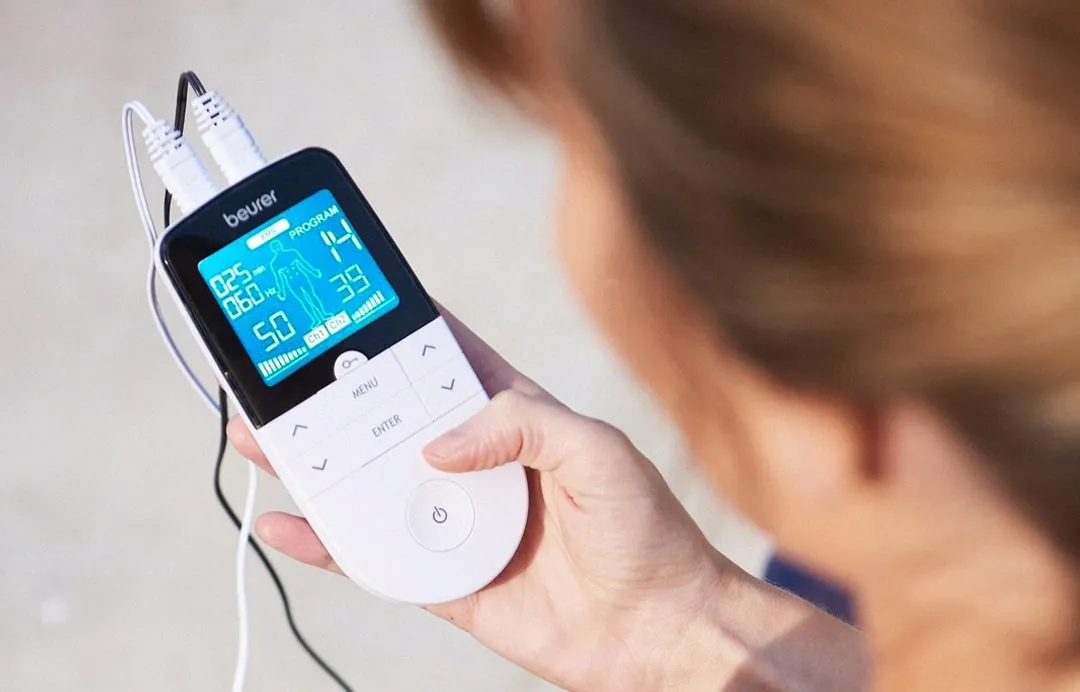
Two independent channels let you run two areas at once with separately adjustable intensity, using four self-adhesive gel electrode pads. That means you can address a stiff shoulder on one side while working a different area on the other, each at its own comfortable level. The illuminated LCD display shows your program and intensity at a glance, and an auto safety shut-off powers the device down automatically for worry-free home use[5].
Simple setup for at-home use
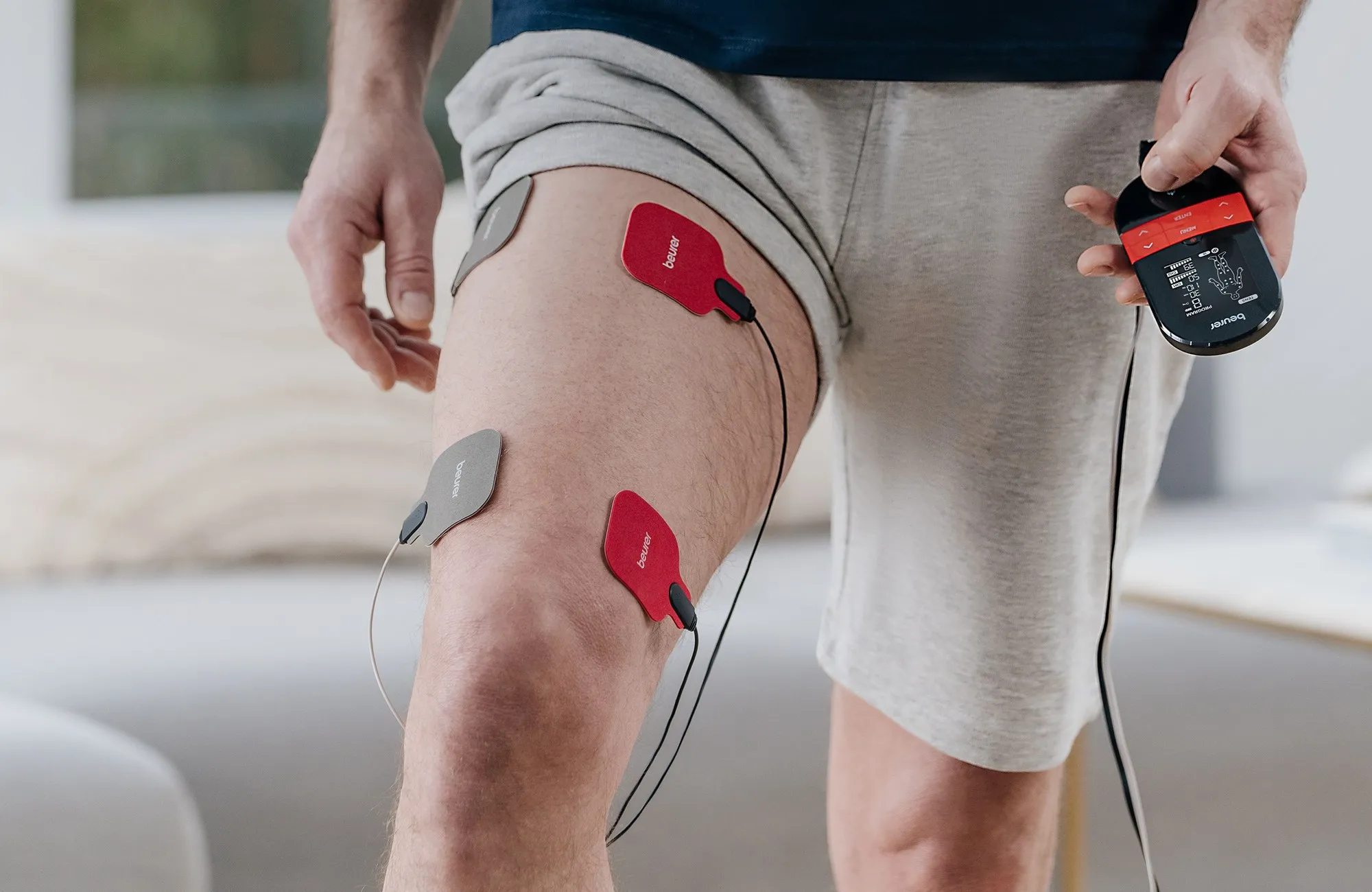
Setup is deliberately uncomplicated: connect the leads, apply the pads to clean skin following the manual's placement diagrams, select the TENS or EMS menu, and adjust the intensity gradually until it feels strong but comfortable. The device is lightweight and portable, so it fits into a bag for use at home or away, and it runs on standard AAA batteries rather than needing a charging cable. Replacement gel pads are available separately to keep the unit working well over time. The EM49 is priced at $59.99[5].
You can explore the full program tables, specifications, and current details on the Beurer EM49 product page, where the complete instruction manual is also available to download before you buy. And as with any device in this category, read the manual fully and check with a healthcare professional if you have any medical conditions or questions about whether electrical stimulation is right for you. Used thoughtfully, a combined TENS and EMS unit becomes a practical companion in your everyday routine, supporting both comfortable days and active ones. That balance of care and capability is what we have stood for as a German company, family-owned since 1919, bringing quality and reliability to health and wellness at home. Healthy. life. style.
Frequently asked questions
What is the difference between TENS and EMS?
TENS delivers low-voltage electrical current to sensory nerves for temporary pain relief, while EMS targets motor nerves to stimulate muscle contractions for muscle conditioning.
Does a TENS unit actually work for chronic pain?
The clinical evidence is mixed. While many people experience temporary relief during use, medical authorities like the NHS and Cochrane note that TENS does not work for everyone and is not a cure.
Can I use TENS and EMS at the same time?
No, the functions serve different goals and use different program settings. The EM49 physically separates its TENS and EMS menus so you choose the appropriate therapy for your specific session.
Where should I place the electrodes?
Pad placement depends entirely on your pain or muscle goal. Always follow the specific diagrams in your device manual and consult a healthcare professional for targeted placement advice.
Who should not use a TENS or EMS device?
According to the Cleveland Clinic, people with pacemakers, epilepsy, or who are pregnant should avoid use. Always check your device's instruction manual for a complete list of contraindications.
TENS devices offer a drug-free way to temporarily ease muscle aches. However, this comfort is a symptom management tool, not a cure, and feeling better during a session does not mean the underlying tissue has healed.
Leaving a TENS unit running overnight may seem like a route to continuous relief, but safety guidelines and device manuals strictly prohibit using a TENS device while asleep. Learn why these rules exist and how to plan a safe awake session instead.
A safe first TENS session comes down to order of operations: check suitability and skin, connect both pads of a channel with the device off, then start at zero intensity and increase slowly. This checklist walks through each step, who should skip TENS entirely, and how to finish and care for your…

 Targeted Pain Relief
 Health Monitoring
 Bye-Bye Itch
 Rest, Relax, Recharge
 Skin Rejuvenation
 Seasonal Relief
 Muscle Relaxation
 Brighten Your Mood
 Kids Wellness & Baby Care
 Fitness Tracking
 Beauty Care
 Feminine Care