Using a TENS Unit for the First Time: A Setup Checklist
What a first TENS session actually involves
A first TENS session is simpler than most people expect. A TENS (transcutaneous electrical nerve stimulation) unit is a small, battery-powered device that sends a low-voltage electrical current through adhesive pads on your skin, at or near the nerves serving the area that hurts. The goal is never to force anything on your body. It is to find a tingling, pulsing sensation that feels strong but comfortable, and to stay well below anything painful. If a session hurts, the intensity is simply too high.
How TENS works is still an area of active research. Cleveland Clinic explains that providers have two leading theories: the current may stimulate nerve cells that block the transmission of pain signals to the brain, changing how you perceive pain, and it may raise the level of endorphins, your body's own pain-relieving chemicals.[1]
It is equally important to hold realistic expectations. An overview of Cochrane Reviews on TENS for chronic pain concluded that, because the underlying evidence is of very low quality, it is not possible to state confidently whether TENS relieves chronic pain compared with sham TENS or no treatment.[2] Cleveland Clinic likewise notes that relief during a session is common, but how long relief lasts afterwards varies from person to person; some people feel better for hours and others feel pain return as soon as the unit switches off.[1]
·Choose a calm moment at home, with nowhere to be for the next half hour or so.
·Plan your first few minutes seated or lying down, so you can get used to the sensation safely.
·Start with the intensity at its lowest setting and increase it slowly.
·Stop immediately if anything feels painful, or if you feel unwell in any way.
That last point is not just comfort advice. The EM49 manual asks you to carry out the first few minutes of treatment sitting or lying down, because a small number of people feel faint when stimulation starts, and it advises switching off and elevating your legs for about 5 to 10 minutes if that happens.[3] A quiet first session is the easiest way to learn what the sensation should feel like.
What should you check before setup?
A good first session is mostly decided before any pad touches skin. Three checks take only a few minutes: whether TENS is suitable for you, whether your skin is ready, and whether the device and its accessories are in proper condition.
·Suitability: the EM49 manual warns that the device is not a substitute for medical consultation and treatment, and advises consulting your doctor first if you are experiencing any pain or suffering from an illness, as well as in situations such as undiagnosed symptoms, diabetes, skin conditions, high or low blood pressure, bleeding disorders or when receiving medical treatment.[3] The NHS makes the same point plainly: if you are not sure what is causing your pain, see a healthcare professional before using a TENS machine.[4]
·Skin condition: pads only work, and only stay comfortable, on clean, intact skin. The NHS advises placing the pads on clean skin near the painful area, and not using TENS on irritated, broken, infected or numb skin.[4] The manual adds that the skin should be clean and free of grease to prolong electrode life.[3]
·Device condition: check the unit, lead wires and pads for wear or damage. The manual asks you to use the device only with the original accessories supplied, which can be re-ordered, noting that failure to do so invalidates the warranty, and to contact Beurer customer service if the instruction manual is damaged or lost.[3]
One more practical check: remove metal from the treatment area. Belt buckles, necklaces, jewelry and piercings should not come into contact with the electrodes during stimulation, so take them off or move them clear before the pads go on.
If any of these checks raises a question, that is your answer for today. Sort out suitability, skin or equipment first, and the session will still be there tomorrow.
Who should not use a TENS unit
TENS is noninvasive and generally well tolerated, but it is not for everyone, and some of the exclusions are serious. Cleveland Clinic advises that you should not use a TENS unit if you are pregnant or if you have an implantable device such as a pacemaker, cancer, epilepsy, deep vein thrombosis, a bleeding disorder, or heart disease.[1]
·People with implanted electrical devices, such as a pacemaker, or with metal implants
·People with epilepsy or other seizure disorders
·People with heart disease, cardiac arrhythmia, or a bleeding disorder or increased tendency to bleed
·People with deep vein thrombosis or cancer
·People who are pregnant
·People with skin injuries, cuts, or swollen or inflamed regions where pads would sit
·Never on the front or side of the neck, including near the carotid artery
·Never on or across the head, directly on the eyes, or covering the mouth
·Never on the genital area
·Never on the front of the ribcage or chest near the heart, or on the chest and upper back at the same time
·Never on broken, infected, inflamed, numb or irritated skin, or on varicose veins
This list is not exhaustive. It draws on Cleveland Clinic's patient guidance and on the EM49 manual's own contraindications and warnings,[1][3] and the device's own instruction manual governs for the complete, model-specific list. Consult a healthcare professional before use, especially if you have any existing health condition. This is a brief check, not an alarm: for most healthy adults using the device as intended, the manual describes TENS as suitable for simple self-treatment.
What connects before you switch on?
Everything connects while the device is still off. The NHS puts it first in its own instructions: make sure the TENS machine is turned off before you start.[4] Working with the unit off means no unexpected impulses while your hands are on the pads, and it matches the sequence in the EM49 manual.
·With the device off, insert the batteries if this is the very first use: the manual's initial-use steps are to slide off the battery compartment cover, insert three AAA alkaline batteries following the polarity markings, and reattach the cover.[3]
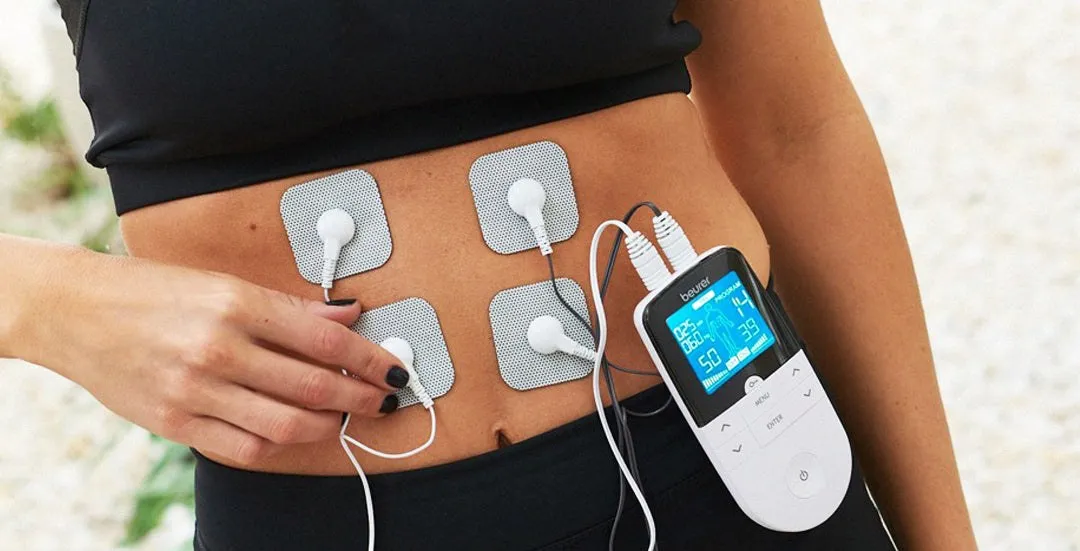
·Connect the lead wires to the adhesive electrode pads, then guide the plugs into the sockets on top of the device. The manual cautions against pulling, twisting or making sharp bends in the cables, and to hold the plug, not the cord, when unplugging.[3]
·Place the pads on clean skin near the painful area, leaving a gap between them, as the NHS describes.[4]
·Only then turn the device on.
One rule in the manual matters more than any other at this stage: both pads of the channel you are using must be properly attached to your body for the device to work, because the current flows between the two pads of a channel.[3] A loose or half-peeled pad is the most common reason a first session feels like nothing at all.
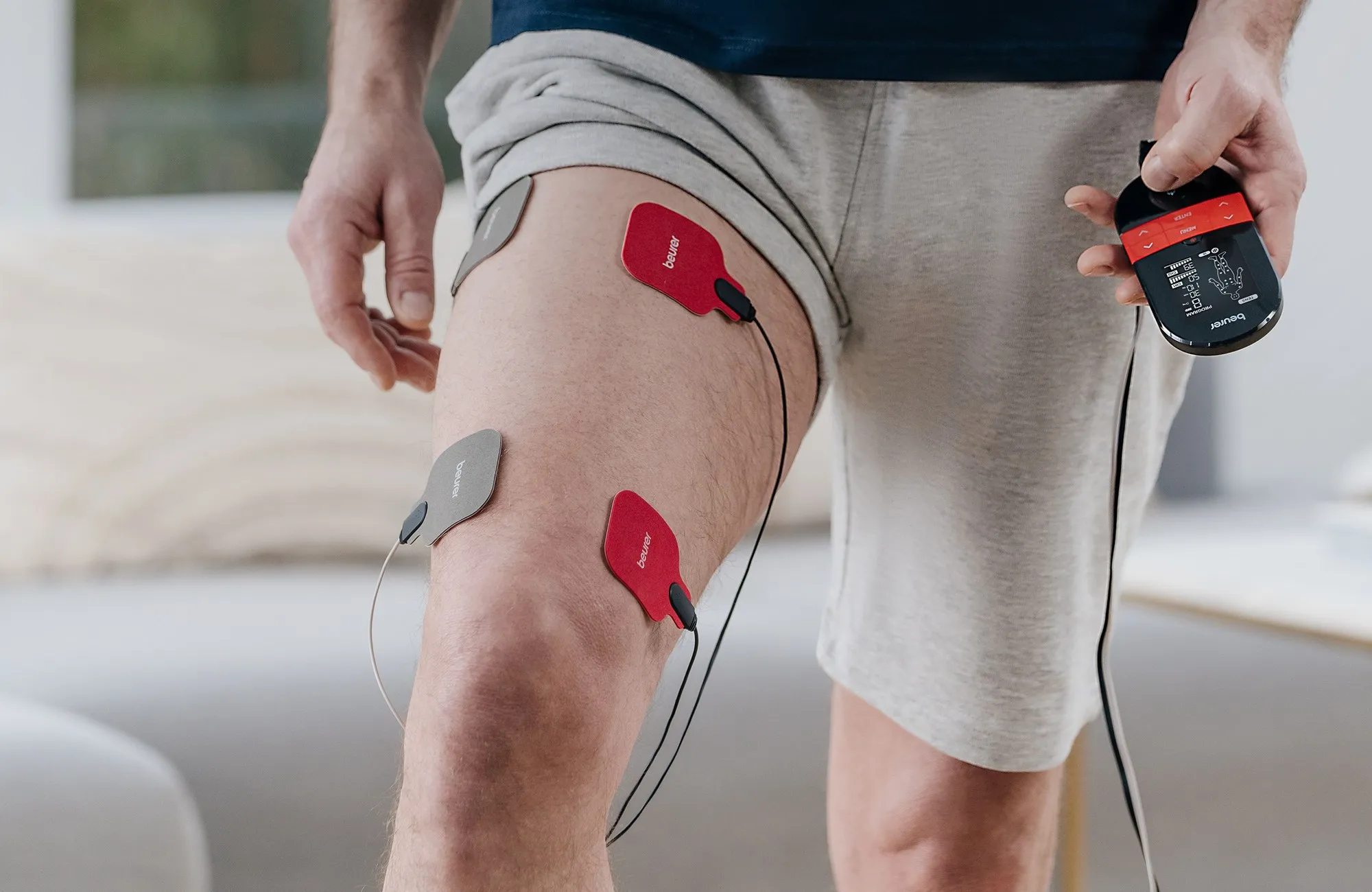
Where exactly the pads should go for your specific area of discomfort is a bigger question than this checklist can answer. The manual has a dedicated electrode positioning section with diagrams for each program, and a healthcare professional such as a doctor or physiotherapist can advise if you are unsure. For a worked example of pad placement around a common pain area, see our guide to placing TENS electrodes for knee pain.
How do you start, pause and finish?
The single most reassuring fact about a first session is this: program intensity begins at zero. The manual states that at the start of stimulation the impulse intensity is set to 00 by default, and no impulses are sent to the electrodes yet.[3] Nothing jumps, nothing surprises you. The sensation arrives only when you invite it.
·Switch the device on and choose a program from the program tables in the manual.[3]
·Increase the intensity slowly using the setting buttons until you start to feel it, then keep adjusting until the sensation is strong but comfortable. The NHS describes the same target: turn up slowly until you feel a tingling sensation that should not be painful.[4]
·To pause at any time, press the ON/OFF button. Note that while a program is paused, the intensity cannot be increased, and you will need to reset your desired level when you resume.[3]
·When you finish, switch the unit, or the channel you were using, off before removing or relocating the pads, to prevent unintentional stimulation.[3]
There is no rush. Finding your comfortable level on session one is the whole task. Intensity can always be raised in later sessions once the sensation is familiar.
Caring for pads and skin after the session
Aftercare is what makes the second session as good as the first. Adhesive pads are the consumable part of any TENS unit, and how you remove, store and replace them decides how long they keep working and how kind your skin stays.
·Remove pads by peeling them firmly from the skin; the manual advises pulling firmly to prevent injuries in the unusual case of highly sensitive skin.[3]
·After use, reapply the electrodes to their carrier foil, disconnect the lead cables from the pads, avoid sharp bends in the cables, and store everything in a cool, well-ventilated space.[3]
·If pads stop sticking, clean the adhesive surface with a damp, lint-free cloth, and clean your skin before the next application; the manual notes that skincare lotions or oils before treatment hurt adhesion, and that shaving can increase electrode life.[3]
Replacement is not optional forever. The manual instructs you to replace the electrodes as soon as their adhesive capability decreases, because unequal adhesion can lead to skin injuries, and to replace them with new ones after 20 uses at the latest.[3]
Finally, listen to your skin. The NHS advises turning off the machine and removing the pads if your skin becomes itchy, irritated or red, noting that redness may be harder to see on brown or black skin.[4] Cleveland Clinic similarly suggests letting your healthcare provider know if you develop a skin rash or itchy skin after TENS use.[1] A day of rest usually settles mild irritation; anything persistent belongs with a professional.
Where the EM49 fits a first session
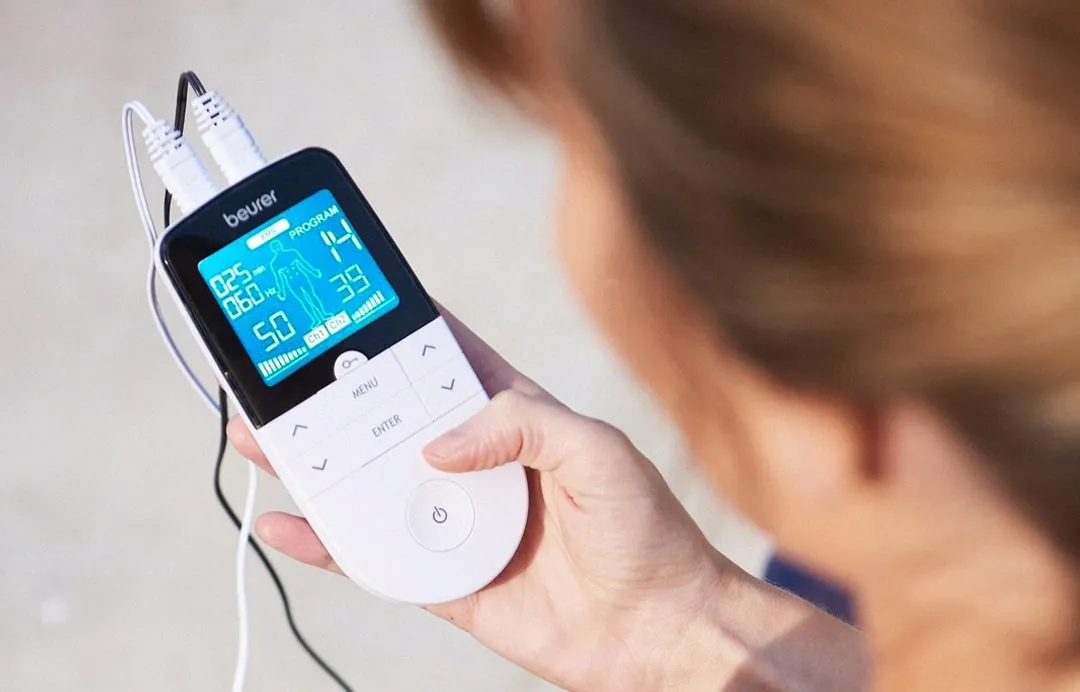
Everything in the checklist above maps directly onto one device: the EM49. It is a dual-channel unit with 50 total programs, 15 TENS and 35 EMS, and four self-adhesive electrodes, with the intensity of each channel set separately.[5] That dual-channel design is exactly why the zero-start and both-pads-on-skin rules matter channel by channel: each channel's intensity begins at 00 and each channel needs both of its pads in firm contact before it will deliver anything.[3]
·50 total programs: 15 TENS programs for pain relief and 35 EMS programs for muscle stimulation, with 6 of them customizable.[5]
·Two independent channels with separately adjustable intensity, so two areas can be treated at different comfort levels.[5]
·A Doctor's Function memory setting that recalls your preferred program, convenient once a first session has found settings that suit you. It is a memory feature, not a diagnosis or a substitute for professional advice.[5]
·An automatic shutoff and a keylock, so the settings you settle on stay set.[3]
If you have worked through the checks, connected with the device off, and started from zero, you have already used the EM49 the way its manual intends. The Beurer EM49 product page carries the full specifications, the program tables and the complete instruction manual, which is the document that governs your specific device. And as with any health decision, a quick conversation with a healthcare professional before your first session is time well spent. Here is to a calmer, drug-free addition to your routine: healthy. life. style.
Frequently asked questions
Should the TENS unit be switched on before I attach the pads?
No. The NHS advises making sure the TENS machine is turned off before you start, then setting the controls, plugging in the wires, and placing the pads on clean skin before switching on. Starting with the device off prevents unexpected stimulation while you are still positioning the pads.
What intensity should I start at for my first TENS session?
Start at zero. The EM49 manual states that program intensity begins at zero, and the NHS advises turning the dial up slowly until you feel a tingling sensation. The sensation should be strong but comfortable, never painful. First-time users should begin seated at a low intensity to get used to the feeling.
Can I use just one pad from a channel?
No. The EM49 manual requires that both pads of the selected channel contact the body, because the electrical current flows between the two pads of a channel. If only one pad is attached, the circuit is incomplete and the channel will not stimulate properly.
Who should not use a TENS unit?
Cleveland Clinic lists pregnancy, pacemakers or other implanted devices, epilepsy, heart disease, deep vein thrombosis, bleeding disorders and cancer among the reasons not to use TENS, and the EM49 manual adds its own contraindication list. These lists are not exhaustive: consult a healthcare professional before use, and let the device's instruction manual govern.
How do I pause or end a TENS session?
Pausing interrupts stimulation on the EM49. To end a session, switch off the unit or the respective channel first, then remove or relocate the pads; the manual warns that removing pads while a channel is live can cause unintentional stimulation. Peel pads off firmly from the skin.
How long can a first TENS session last?
Cleveland Clinic notes some people use a TENS unit several times a day for up to 60 minutes each time, but for a first session it is wise to stay seated, keep the intensity low and stop if anything feels uncomfortable. Follow your device manual's timer settings and check with a healthcare professional about a routine that suits you.
When do I need to replace the electrode pads?
Replace the pads when the adhesive stops sticking well. The EM49 manual advises replacing electrodes with new ones after having used them 20 times at the latest, because unequal adhesion can lead to skin injuries. Also replace them if the skin becomes red, itchy or irritated with use.
Leaving a TENS unit running overnight may seem like a route to continuous relief, but safety guidelines and device manuals strictly prohibit using a TENS device while asleep. Learn why these rules exist and how to plan a safe awake session instead.
TENS devices offer a drug-free way to temporarily ease muscle aches. However, this comfort is a symptom management tool, not a cure, and feeling better during a session does not mean the underlying tissue has healed.
TENS targets sensory nerves for temporary pain relief, while EMS triggers muscle contractions for conditioning. Understanding the difference helps you choose the right function for your soreness and safely set up a combined device.

 Targeted Pain Relief
 Health Monitoring
 Bye-Bye Itch
 Rest, Relax, Recharge
 Skin Rejuvenation
 Seasonal Relief
 Muscle Relaxation
 Brighten Your Mood
 Kids Wellness & Baby Care
 Fitness Tracking
 Beauty Care
 Feminine Care